A Blog by the Editor of The Middle East Journal

Putting Middle Eastern Events in Cultural and Historical Context

Showing posts with label MEI. Show all posts

Tuesday, April 26, 2016

An MEI/MEJ Connection to Tonight's Maryland Primary

Tonight's Maryland Democratic primary result has a connection to both the Middle East Institute and to The Middle East Journal. The Democratic nomination for Senate, to replace the long-serving Sen. Barbara Mikulski, was won by Congressman Chris Van Hollen, a rising star in the Democratic leadership. Since Maryland Democrats have a two-to-one registration advantage in Maryland, he is likely to win in November.

Van Hollen is the son of Ambassador Chris Van Hollen, Senior, onetime Ambassador to Sri Lanka and the Maldives, Deputy Assistant Secretary of State for the Near East and South Asia, and a career diplomat. (The younger Van Hollen was born in Karachi.)

Ambassador Van Hollen
As I noted after the elder Van Hollen's passing at age 90 in 2013, after retiring from the Foreign Service, Ambassador Van Hollen served as Vice President of the Middle East Institute from 1988-1992, and concurrently as Editor of The Middle East Journal (and thus a predecessor of mine) in 1991-1992.

Back in the 1990s, long before I was myself at MEI, I remember a conversation with Ambassador Van Hollen in which he told me his son had been elected to the Maryland State Legislature, saying, "someday he may be better known than I was."

Indeed.

Friday, January 30, 2015

Former MEI President Robert V. Keeley, 1929-2015

Image result for robert v. keeleyAmbassador Robert V. Keeley, a former President of The Middle East Institute, died earlier this month in Washington at the age of 85. Born in Beirut and the son of an American diplomat, Keeley spent 34 years in the US Foreign Service. He served as Ambassador to Mauritius, Zimbabwe, and Greece, and is also remembered for his role as Deputy Chief of Mission in Cambodia in 1974-75, at the time of the fall of Cambodia to the Khmer Rouge.

Ambassador Keeley served as President of MEI from 1990 to 1995.

Thursday, December 4, 2014

Why Blogging is Light this Week

Most of you probably won't have noticed, but blogging has been light this week, and perhaps a structural/historical footnote is in order.

The Middle East Institute was founded in 1946 and the first issue of The Middle East Journal appeared in January 1947. In those days of paper editing, remote typesetting and mailed galleys, not to mention hot lead type, I assume the turnaround time for an issue could have been months. In this electronic era, it's not. Our deadlines are the first (or given weekends, the first few days) of January, April, July, and October. But the Winter issue is the killer. It needs to go to press around January 1. But during the Winter issue cycle (October to January) the following always occur: 1) the MEI Annual Conference, which our staff must attend; 2) MESA, where we always send somebody and when (as this year) it's in Washington, even more; 3) Thanksgiving weekend; and the 4) Christmas to New Year's period, when MEI offices are frequently closed. So the usual cycle time on the issue is much foreshortened and compressed for Winter. (If there's an afterlife I plan to raise this with the founding fathers of 1946: younger publications like Middle East Policy sensibly put their Winter issue in December so it doesn't burden the holidays.)

Last year we ran late and it caused problems, cascading down the schedule. I'll not let that happen again, ever, and I also don't want myself or my staff working through the holidays, so we're racing flat out on the Winter issue, and I have less time for the blog. Things should ease considerably by next week, so forgive if there's dearth of postings this week.

Tuesday, November 18, 2014

MEI Annual Conference on Thursday

In this week of additional violence and terror from ISIS to Jerusalem, let me remind those of you in the Washington area (and anyone arriving early for the MESA Conference this weekend as well), that MEI's 68th Annual Conference is this week. Though the Banquet tomorrow night and lunch on Thursday are paid events, the Conference itself  on November 20 has free registration. The theme this year is "Navigating the Storm: The Middle East in 2015." Full details and information here.

Friday, October 11, 2013

Seelye Sisters Art Exhibit in Kuwait

Though I haven't seen it I wanted to note that MEI Vice President Kate Seelye and her sister have a  multimedia art exhibit which has opened in Kuwait. The sisters are daughters of the late US Ambassador Talcott Seelye and come from a long line of Americans involved in the Middle East, at AUB and elsewhere; the exhibit includes family photos and is aimed at remembering the positive history of the US role in the Middle East. A Kuwaiti review here.

Wednesday, July 3, 2013

Ambassador Roscoe S. "Rocky" Suddarth, 1935-2013, MEI President, Mentor, Friend

Fifteen years ago this very month I got a call from Ambassador Roscoe S. Suddarth, President of the Middle East Institute, informing me that Mary-Jane Deeb was stepping down as as Editor of The Middle East Journal and inviting me to be a candidate for the job. In October of that year I became Editor. Ambassador Suddarth, always "Rocky" to those who knew him, passed away on June 29. I owe Rocky a lot more than just my job. He was a strong supporter of the Journal, and of me. And one of the nicest and smartest people I have known.

Rocky was a career diplomat, and served as US Ambassador to Jordan from 1987 to 1990. He took over as President of MEI after his retirement, serving from 1995 to 2001. He was the first of three MEI Presidents I have served as MEJ Editor.

Rocky hailed from Nashville and had the easygoing manner of a Tennessean, but with overlays of Yale and Oxford. Under his Presidency MEI created its Public Policy Center, and Rocky and his wife Michele landscaped the Islamic garden in the MEI courtyard as a donation to the Institute.

After retiring from MEI, Rocky, an enthusiast for modern jazz, went back to graduate school to acquire another Master's degree, this one in music, at age 72.

MEI has lost a leader and benefactor, and I have lost a friend.

Wednesday, May 15, 2013

MEI Launches New Arab Transitions Website

The Middle East Institute has announced the official launch of its new Arab Transitions website, offering  a wide range of news and opinion on the transitions in the Arab world, with an initial focus on Egypt. There's a lot of material there already, and more to come. Do take a look.

The new site is also part of s redesigned main MEI website, which I commend to you as well;  you'll even find a link to this  blog on there. Congratulations to our new Arab Transitions Project and to the general website as well.

Wednesday, April 17, 2013

Reminder: MEI Arab Transitions Project Launch Tomorrow

 I've posted about this before, but for those of you in the DC area, a reminder that MEI  is launching its Arab Transitions Project tomorrow with a half-day conference at the National Press Club focusing on Egypt. You can find the program and registration information here.


Friday, April 5, 2013

MEI to Launch Arab Transitons Project

The Middle East Institute has announced the launch of its Arab Transitions Project, focusing on transitions in the wake of the Arab uprisings. The launch will be marked by a half-day conference on Egypt at the National Press Club on April 18, featuring Arab Transitions Project Senior Scholar Khalil al-Anani. You can read the full press release and registration information here,

Wednesday, March 13, 2013

Obama Nominates Ambassador Deborah K. Jones of MEI as Ambassador to Libya

President Obama today announced that he is nominating Ambassador Deborah K. Jones as the next US Ambassador to Libya, replacing the late Ambassador Chris Stevens. Ambassador Jones, who is the former US Ambassador to Kuwait and has served throughout the Middle East, has most recently been serving as Scholar-in-Residence here at the Middle East Institute.. Her MEI bio is here. Let me join the rest of MEI in congratulating our colleague on this appointment.

Tuesday, February 26, 2013

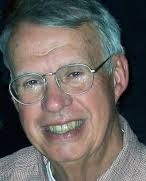
Ambassador Chris Van Hollen, Sr., Former MEI VP and MEJ Editor

Ambassador Van Hollen
I want to note, belatedly, the passing of Ambassador Christopher Van Hollen, Senior on January 30 at the age of 90. Ambassador Van Hollen, who spent most of his career dealing with South Asia, also served as a Deputy Assistant Secretary of State for Near Eastern and South Asian Affairs and as Ambassador to Sri Lanka and the Maldives, and later as a Vice President of the Middle East Institute, and as one of my predecessors as Editor of The Middle East Journal. His son is Representative Chris Van Hollen, Jr. (D-MD),

Born in Baltimore in 1922, the elder Van Hollen served in the Navy during World War II and took a doctorate at Johns Hopkins University. He served in diplomatic posts in India, Pakistan, and Turkey, and was a Deputy Assistant Secretary of State during the Bangladesh war of independence. He served as Ambassador to Sri Lanka and the Maldives 1972-1976.

After his retirement, Van Hollen served as a Vice President of the Middle Institute in 1988-92. He concurrently served as the fifth Editor of The Middle East Journal in 1991-1992. His 1990 oral history with the Association of Diplomatic Studies and History can be found online.here.


Thursday, January 3, 2013

Hof and Landis on the Future of Syria; Also New MEI Summary

Two people who know Syria a hell of a lot better than I do have weighed in on the future of Syria in 2013. Forget all your "tipping points": neither paints an optimistic picture. And my MEI colleague John Calabrese has provided a summary of discussions carried out by MEI with the Hollings Center on "The Regional Implications of the Syria Crisis." which also can serve as a good summary of the state of play.

More sobering are the assessments from Fred Hof and Josh Landis. Hof, who recently left the State Department after working as a special advisor on Syria, and is now at the Atlantic Council, offers "Syria 2013: Will the Poison Pill of Sectarianism Work?" He begins thus:
At the dawn of the New Year President Bashar al-Assad and his regime remain committed to pursuing a corrosively destructive sectarian survival strategy, one enjoying a critical assist from an increasingly radicalized and politically directionless armed opposition.  Left to their own devices—as both the West and Russia seemed inclined to leave them—the regime and its armed opponents seem poised to devote 2013 to putting Syria on an irreversible course to state failure and perpetual sectarian conflict.
He argues that the regime strategy of relying on sectarian cliques dooms the country's future if it is successful; it's a grim and lengthy assessment worthy of your reading it in full.At the end he offers some hope:
Yet if 66 years of independence have produced anything resembling secular, civic citizenship overriding all other categorical distinctions, there is hope that the state-killing enterprise of a family regime can be defeated and a Syria of 23 million citizens saved.  For this to happen, however, those who oppose the regime must apply antidotes to the poison pill with intelligence, discipline, and credibility.  Meanwhile, perhaps those occupying key positions within the regime will have second thoughts about a strategy whose targeting of innocents will surely wreck the country and for which they will be held personally accountable. 
Meanwhile Joshua Landis seemed the odd man out a year ago when he predicted the Asad regime (though Hof and Landis both prefer "Assad") could survive through 2013. That alone should be reason to listen when he says "Assad Regime May Well Survive to 2014." He gives his reasons at his site, citing interviews he has given.

UPDATE: And while we're on Syria, check out Bilal Saab and Andrew J. Tabler at Foreign Affairs: "No Settlement in Damascus."


Monday, November 26, 2012

MEI Annual Conference Videos, Transcripts Now Online

This year's Middle East Institute Annual Conference videos, podcasts and transcripts are now available online through this page.

Wednesday, November 14, 2012

Looking Back on MEI's Annual Conference

As I'd noted, last night and today marked MEI's 66th Annual Conference. It was, I think, a very successful one and I'd urge those of you who weren't there (or those who were but couldn't get enough) to keep an eye on the MEI website where transcripts should be available soon and also video.

A few blog readers introduced themselves to me today, and I thank you for reading me.

MEI Annual Conference Today

I'll be at MEI's Annual Conference all day today, so any posting won't occur till evening or, likelier, tomorrow.

Thursday, November 8, 2012

Counting Down to MEI's Annual Conference


A reminder that the Middle East Institute's Annual Conference is Tuesday and Wednesday.  The conference itself, on Wednesday, is free, but please register here; the banquet on Tuesday and luncheon on Wednesday do require tickets, also available through the link. Updated: Registration is now closed.

Tuesday, October 2, 2012

Ambassador Chamberlain on Diplomacy after Benghazi

MEI President Wendy Chamberlin has a piece on "After Benghazi: Diplomacy with a State; War Within," which deserves your attention. It also appears at The Huffington Post.

Monday, September 24, 2012

A Challenge Accepted, An Article "Liberated"

Last week I linked to Marc Lynch's post on Jordan, in which he offered a number of suggestions for readings on Jordan, including one from The Middle East Journal, of which Marc noted, "(paywall,  unless Michael wants to liberate it)."

Well, I know when I've been challenged, and publicly on the Internet no less. The article, Andrew Barwig's "The New Palace Guards: Elections and Elites in Jordan and Morocco" is now made available for free download at the link. Thanks to our hosting partners at Ingenta for making it available. After 90 days or thereabouts it will revert to a paywall, but for now it's free.

Of course, members of the Middle East Institute receiving The Middle East Journal regularly would have read it a couple of months ago, so you might want to consider joining MEI now so as not to miss future articles like this one.

Monday, July 16, 2012

Assessing the Libyan Results: Inputs from MEI, Others

It's the season for analysis of the results of the Libyan elections. At Foreign Policy, Sean Kane offers "Building on Libya's Electoral Success": and at Al-Monitor, Mustafa Fetouri discusses "Why the Islamists Lost in Libya." And closer to home, the Middle East Institute asks "Is Libya Really on the Path to Democracy?", with Christopher Blanchard and Daniel Serwer, who were election monitors, and analyst Karim Mezran, in a panel discussion on Libya moderated by Ambassador David Mack, who is a frequent commenter on this blog.

It's this Thursday; details and registration info here;  if you're in the DC area (or have your LearJet fueled up), come on by.

Tuesday, March 27, 2012

Vali Nasr Named Dean of Johns Hopkins SAIS

MEI's neighbors across our back ally, John's Hopkins University's Paul H. Nitze School of Advanced International Studies (SAIS), has named a prominent Middle East specialist, Vali Nasr,  as its new Dean. Just before the weekend Vali had told me he was just to busy to peer review an article I'd asked him to look at. Now I know why.

MEI and SAIS have long had a neighborly relationship, and back in the early 1950s had an organic one; Vali Nasr has emerged as one of the leading experts on Southwest Asia, particularly Iran, Afghanistan, and Pakistan, on Shi&lquo;ism in politics, and related fields. He's been at Tufts most recently but will take over at SAIS July 1. I congratulated him by e-mail but let me do so in a more public forum here. I think it will strengthen SAIS, give Vali Nasr greater visibility, and spruce up the neighborhood.